.png)
Why Is My Hot Water Brown?

Turn on the hot tap and see brown water in the basin, shower or laundry sink, and your mind usually goes straight to one question - why is my hot water brown? It is a fair concern. Discoloured hot water can point to anything from harmless sediment being stirred up to a failing hot water system that needs urgent attention.
The key detail is whether the brown water is only coming from the hot tap, or from both hot and cold. If it is only the hot side, the issue is usually inside your hot water system or the hot water pipework. If both are brown, the cause may be further back in the water supply or your home’s main plumbing.
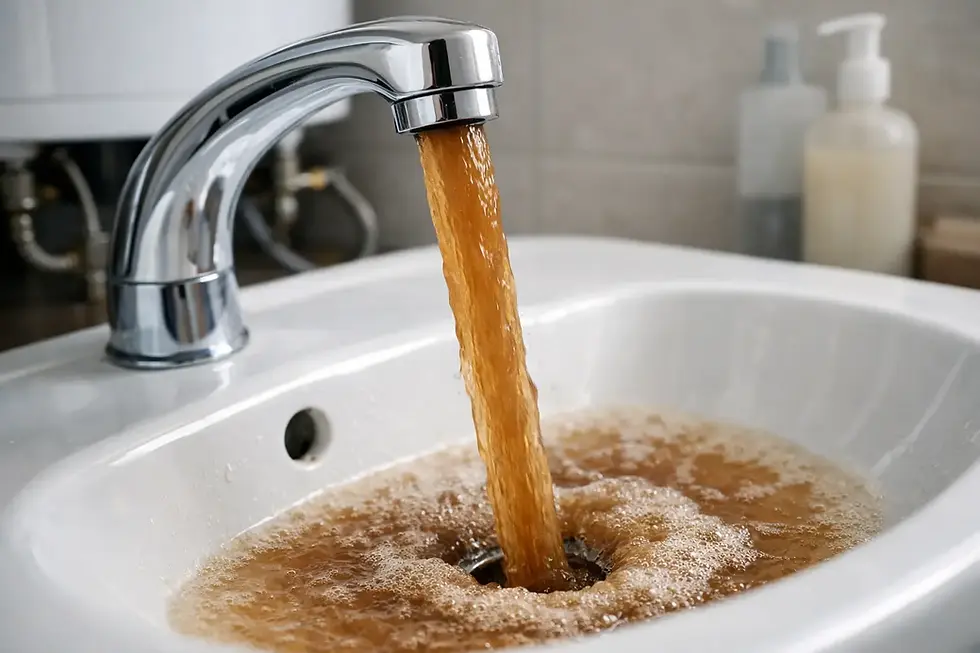
Why is my hot water brown only on the hot side?
When only the hot water is brown, the most common culprit is rust or sediment inside the hot water unit. Storage systems naturally collect mineral sediment over time. As that sediment builds up, it can discolour the water, especially after the system has been sitting unused overnight or after plumbing work in the area.
Older systems are more likely to produce rusty or brown water because the inside of the tank can start to corrode. Once corrosion sets in, the water may look light brown, reddish-brown or even orange. Sometimes it clears after a minute or two. Sometimes it keeps coming back, which is usually a sign the issue is not going away on its own.
There is a bit of an it depends factor here. A one-off burst of brown water after maintenance in the street is different from repeated discolouration over several days. The first can be temporary. The second often means the hot water system needs proper inspection.
The most common causes of brown hot water
Sediment build-up in the tank
Storage hot water systems heat and reheat water every day, and over time minerals can settle at the bottom of the tank. That sediment can be disturbed when demand changes, after the water has been shut off, or as the unit ages. When it mixes back through the tank, the water can come out cloudy, rusty or brown.
Sediment does not always mean the whole system needs replacing, but it does mean the unit is under extra strain. It can reduce efficiency, create rumbling noises and shorten the life of the system.
Corrosion inside the hot water system
A steel tank relies on protective components to slow down rust. As those parts wear out, the inside of the tank can begin corroding. Once rust starts forming in the tank itself, brown water is often one of the first visible signs.
This is where age matters. If your system is getting on in years and brown hot water has become a pattern, replacement may be more practical than repeated repairs. A plumber can tell you whether the tank is still serviceable or whether you are spending money on borrowed time.
Hot water system leaking from base indicating failure Failed hot water system due to severe corrosion
A worn sacrificial anode
Many storage systems contain a sacrificial anode, which is designed to corrode before the tank does. When that anode is depleted, the tank loses a key layer of protection. Rust can then begin affecting the unit more directly.
An anode can sometimes be replaced before the tank fails, but timing matters. If corrosion has already spread, replacing the anode alone may not solve the problem.
Rusty hot water pipes
The issue is not always the tank itself. In older homes, sections of galvanised pipe can corrode internally and release rust into the hot water line. If brown water appears at some taps but not others, pipework may be part of the problem.
That is why a proper diagnosis matters. Replacing a hot water unit will not fix corroded pipework elsewhere in the house.

Recent water supply works or plumbing works
If the local water supply has been interrupted, or if work has been done on your property, sediment can be stirred up in the lines. That discolouration may affect hot water first or seem worse on the hot side because the hot tap is drawing from a storage tank as well.
If it clears quickly and does not return, it may have just been a temporary disturbance. If it lingers, there is likely more to it.
Is brown hot water dangerous?
Brown hot water is not something to ignore, but it is not always an emergency either. In many cases, the main concern is that the system is deteriorating or carrying a heavy sediment load. The water may be unpleasant to use, can stain fixtures and washing, and can leave you with less confidence in the condition of the system.
As a general rule, it is best not to drink or cook with discoloured water. Even if the cause turns out to be sediment rather than a serious contamination issue, brown water is a sign something needs checking.
If the water also has a metallic taste, strong smell, fluctuating temperature, strange noises from the unit, or visible leaking around the tank, treat it as more urgent. Those signs together often point to a system nearing failure.
What you can check before calling a plumber
Start simple. Run the cold water at the same tap and check whether it is clear. Then test the hot water at a few different taps around the home. This helps narrow down whether the issue is isolated to one fixture, one section of pipework, or the whole hot water system.
Take note of when the discolouration appears. If it is worst first thing in the morning, after the home has been empty, or after recent plumbing works, that pattern is useful. If the water stays brown no matter how long it runs, that is also worth mentioning.
You can also check the age of your hot water system if you know it. A unit near the end of its expected service life with repeated brown water is usually telling a pretty clear story.
What you should not do is start pulling apart valves or attempting repairs yourself. Hot water systems involve pressure, heat, water connections and, in some homes, petrol components. That is work for a licensed professional.
When brown hot water means you should call straight away
There are some situations where waiting usually makes things worse. If the tank is leaking, the water is dark brown every time you use hot water, or the system is making banging, popping or rumbling noises, book a licensed plumber promptly.
The same goes if hot water pressure has dropped sharply, the unit is producing inconsistent temperatures, or the discolouration keeps returning after clearing briefly. These are often signs the problem is inside the system rather than a temporary supply issue.
For Brisbane households, it is also worth acting early rather than waiting for a full failure. A hot water system rarely chooses a convenient time to give up, and once a tank lets go, you can be dealing with water damage as well as no hot water.
How a plumber diagnoses brown hot water
A proper inspection usually starts with isolating where the discolouration is coming from. That means checking whether the issue affects only hot water, only certain fixtures, or the full property. From there, a plumber may assess the condition of the unit, look for signs of corrosion, inspect valves and fittings, and consider the age and type of the system.
If the problem is sediment-related, maintenance may help in some cases. If the tank is corroded internally, replacement is often the safer and more cost-effective path. If pipework is contributing to the issue, the fix may involve targeted pipe replacement rather than the hot water unit alone.
The main thing homeowners want is a clear answer, not guesswork. That is exactly why it helps to have a local residential plumber who explains what is happening and what your options are.
Can brown hot water be fixed without replacing the system?
Sometimes, yes. If the cause is minor sediment disturbance or an early maintenance issue, a repair may be possible. If a component has failed but the tank itself is still in good condition, replacing that part could make sense.
But if the tank is rusting internally, there is usually no lasting repair for that. You might get temporary improvement, but the corrosion will continue. In that situation, replacement is generally the more dependable option.
That is the trade-off. A cheaper short-term fix can be appealing, but if the system is already on the way out, it often leads to another call-out and more cost not far down the track.
How to reduce the chance of it happening again
Regular servicing helps, especially for storage systems that work hard year-round. Keeping an eye on system age, dealing with strange noises early, and not ignoring small changes in water quality can all make a difference.
It also helps to act on warning signs before they become failures. Brown hot water, fluctuating temperature, reduced pressure and leaks around the unit are all signs that deserve attention. For homeowners and property owners, early action usually means more options and less disruption.
If you are asking why is my hot water brown, the answer might be simple, or it might be your hot water system telling you it is nearing the end. Either way, clear water should not be a guessing game. If something looks off, getting it checked properly can save you from a bigger plumbing problem later.


Comments