.png)
How to Choose a New Toilet

A toilet usually only gets your attention when it starts leaking, rocking, blocking more often, or looking badly out of place after a bathroom update. If you are working out how to choose a new toilet, the best place to start is not with colour or brand - it is with what will actually fit your bathroom, suit your household, and work properly with the existing plumbing.
For Brisbane homeowners and property owners, that matters more than most people expect. A toilet can look great in the showroom and still be the wrong choice once it reaches your home. Set-out, trap type, flushing performance, water efficiency, seat height and pan shape all affect how well it performs day to day.

How to choose a new toilet without getting caught out
The biggest mistake people make is assuming all toilets are much the same. They are not. A replacement toilet needs to match your bathroom layout and plumbing set-up, and a new toilet for a renovation should also suit how the room is used.
If the toilet is for a family bathroom, easy cleaning and dependable flushing usually matter more than a designer shape. If it is for an ensuite or powder room, space may be the bigger issue. For a rental property, durability, water efficiency and easy-to-source replacement parts are often the smarter priorities.
That is why choosing a toilet is partly about style, but mostly about practicality.
Start with the rough-in and set-out
Before you think about brands or finishes, check the set-out. This is the distance from the wall to the centre of the waste pipe. If the new toilet does not suit the existing set-out, installation becomes harder and sometimes more expensive.
Some toilets are designed to suit a range of set-outs, while others are more fixed in what they can accommodate. Back-to-wall suites can be especially neat-looking, but they need the right dimensions to sit properly. In older Brisbane homes, measurements are not always as straightforward as expected, so this is one area where getting professional advice early can save time and money.

Know the difference between S-trap and P-trap
Trap type matters because it determines how the toilet connects to the waste pipe. An S-trap goes through the floor, while a P-trap goes through the wall. The wrong choice simply will not work with the existing plumbing unless additional alterations are carried out.
If you are replacing like for like, the existing toilet often gives you the answer. If it is a renovation or the bathroom has had previous changes, it is worth confirming rather than assuming.
Choose the toilet style that suits the room
There is no single best toilet for every home. The right style depends on available space, cleaning access, budget and the look you want.
Close-coupled toilets are a common choice because they are practical, familiar and often cost-effective. The cistern sits directly on the pan, which keeps installation relatively straightforward.
Back-to-wall toilets are popular in modern bathrooms because they create a cleaner, neater finish. They can also make a smaller bathroom feel less cluttered. The trade-off is that access and fit need to be right, and some models can be more involved to install.
Wall-hung toilets have a sleek appearance and make floor cleaning easier, but they usually require an in-wall frame and cistern. They are more common in full bathroom renovations than simple replacements because the installation work is more substantial.
If you are replacing an old toilet and want to keep costs under control, a straightforward floor-mounted suite is often the most sensible option.
Think about how much space you really have
A toilet that is too bulky can make a bathroom awkward to move around in. In a compact ensuite or separate toilet room, projection from the wall matters. In a larger family bathroom, a little more pan size may improve comfort.
Door swings, vanity placement and shower screens can all affect what fits comfortably. A toilet should not just fit on paper - it should allow enough room to sit, stand and clean around it without hassle.
Comfort matters more than people think
Most people do not spend much time comparing toilet dimensions until they use one that feels too low, too cramped or difficult to clean. Then it becomes obvious very quickly.
Pan height can make a real difference, especially for older household members, taller adults, or anyone with mobility concerns. A comfort-height toilet can be easier to use than a standard-height model, but it may not be everyone’s preference in a home with young children.
Seat shape also affects day-to-day comfort. Some pans are more compact, which can suit small bathrooms, while others offer a little more room. Soft-close seats are a worthwhile feature for many households because they reduce noise and wear.
Flushing performance is not just a sales feature
A toilet should clear the pan properly with a standard flush and do it consistently. If it needs repeat flushing, the savings from a water-efficient model disappear pretty quickly.
This is where it pays to look past appearances. A sleek toilet that performs poorly will frustrate you every day. Good flushing design, an effective pan wash, and a cistern that refills reliably are all worth paying for.
For busy homes, reliability should come ahead of novelty. A toilet that has readily available replacement parts and a proven flushing system is usually a safer long-term choice than a model chosen purely for looks.
Rimless vs traditional rim designs
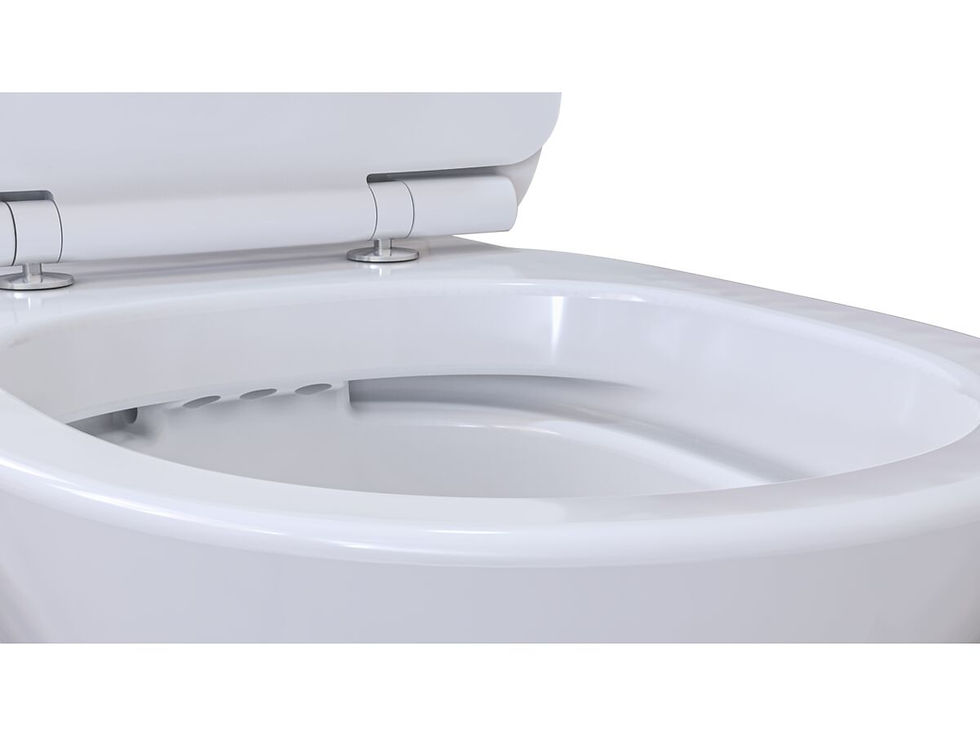
Rimless toilets have become more popular because they are easier to clean and can offer a more thorough flush pattern. With fewer hidden edges, there is less space for grime to build up.
Traditional rimmed pans can still perform well, and some are more affordable, but they are often harder to clean properly over time. If hygiene and easy maintenance are high on your list, rimless is worth considering.
Water efficiency should be part of the decision
Most homeowners want a toilet that uses less water, but there is a balance to strike. You want efficiency without sacrificing performance.
A modern dual-flush toilet is usually the standard choice, and for good reason. It gives you more control over water use and can help reduce water bills over time. In Brisbane homes where toilets are used frequently by families or tenants, that can add up.
If you are replacing a very old toilet, even a good-quality modern model may deliver a noticeable improvement in water use. Just make sure the new suite also has the flushing performance to match.
Think beyond the purchase price
The cheapest toilet on the shelf is not always the cheapest toilet to own. If it has poor flush performance, limited parts availability, or a shape that is difficult to install in your bathroom, the savings can disappear quickly.
It is better to think in terms of total value. That includes the cost of the unit, installation, any plumbing adjustments, and how likely it is to give trouble later. Spending a little more upfront for a dependable model can be the smarter move.
For landlords and property investors, this point is especially important. Choosing a toilet that is durable, easy to service and less likely to cause tenant complaints is often worth more than choosing the lowest ticket price.
How to choose a new toilet for cleaning and maintenance
A toilet can look simple, but some designs are much easier to keep clean than others. Smooth-sided pans, concealed traps and rimless bowls often reduce the places where dust and grime collect.
That said, concealed designs can sometimes make servicing less straightforward depending on the model. This is one of those areas where the best choice depends on what matters most to you - easier day-to-day cleaning, or easier access to components if repairs are needed later.
Good availability of replacement inlet valves, outlet valves, seals and seats is another practical point people often overlook. Well-known, established toilet systems usually make future maintenance easier.
When professional advice makes the job easier
If you are doing a bathroom renovation, changing the bathroom layout, or replacing an older toilet with an unusual set-out, it helps to get advice before you buy. A licensed plumber can confirm what will fit, what adjustments may be needed, and whether your preferred toilet is a sensible choice for the space.
That can prevent the common problem of buying a toilet that looked perfect online or in-store but creates installation issues at home. For Brisbane households wanting a straightforward, no-fuss replacement, a local residential plumber can usually point you towards a toilet that balances fit, function and value.
At Howzat Plumbing, that is often where the best results come from - not the fanciest model, but the one that suits the home, works properly, and gives you fewer headaches down the track.
A new toilet is one of those purchases that rewards practical thinking. If it fits properly, flushes well, saves water and is easy to live with, you will hardly think about it again - and that is usually the sign you chose well.


Comments